
UNESCO World Heritage
UNESCO World Heritage Sites
UNESCO World Heritage Sites are unique cultural or natural values recognized by the World Heritage Committee and included in the World Heritage Program.
The program's goal is to protect humanity’s cultural and natural heritage and to maintain a registry of these invaluable assets.
The central principle for a site’s inclusion on the World Heritage List is its "outstanding universal value." This means the site possesses a unique quality or significance, distinct from all others, that represents an important heritage for all of humanity.
In the case of the Hortobágy National Park, this uniqueness and significance lie in its status as a cultural landscape shaped by pastoral societies. The area still bears visible and intact traces of traditional land use practices that are thousands of years old, exemplifying the harmonious relationship between humans and nature.
Hortobágy National Park – the Puszta was inscribed on the UNESCO World Heritage List in 1999.
In Hungary, World Heritage values automatically received the Hungarikum title under the force of law. As a recognition of this status, the director of the Hortobágy National Park Directorate (HNPI) at the time received a commemorative statuette on December 3, 2013, at the Budapest Operetta Theatre.
The emblem of the World Heritage Program symbolizes the interconnectedness of cultural and natural values. The central square represents human craftsmanship, while the surrounding circle symbolizes nature. Together, they illustrate an organic connection. The circular shape also refers to the Earth, symbolizing protection and preservation.
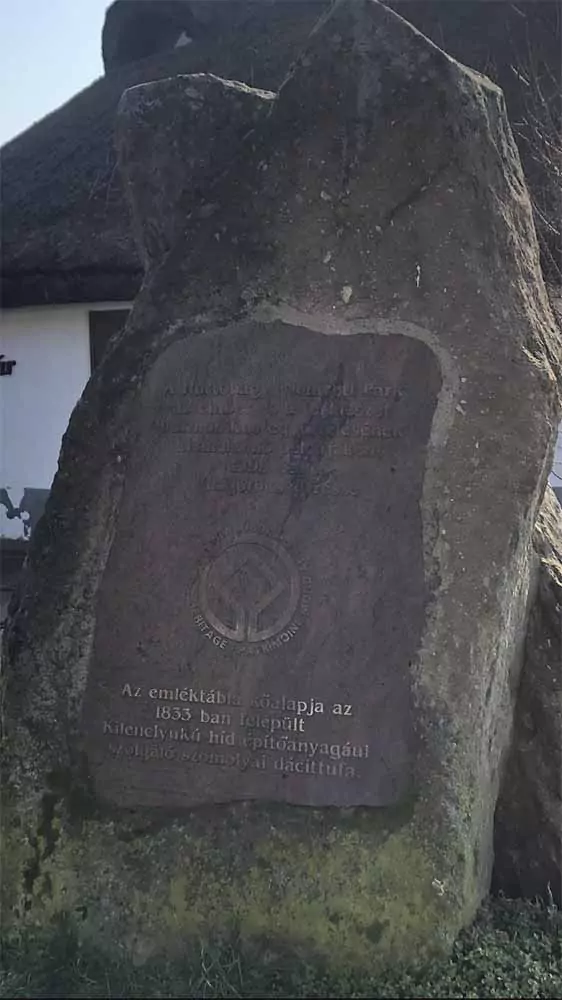
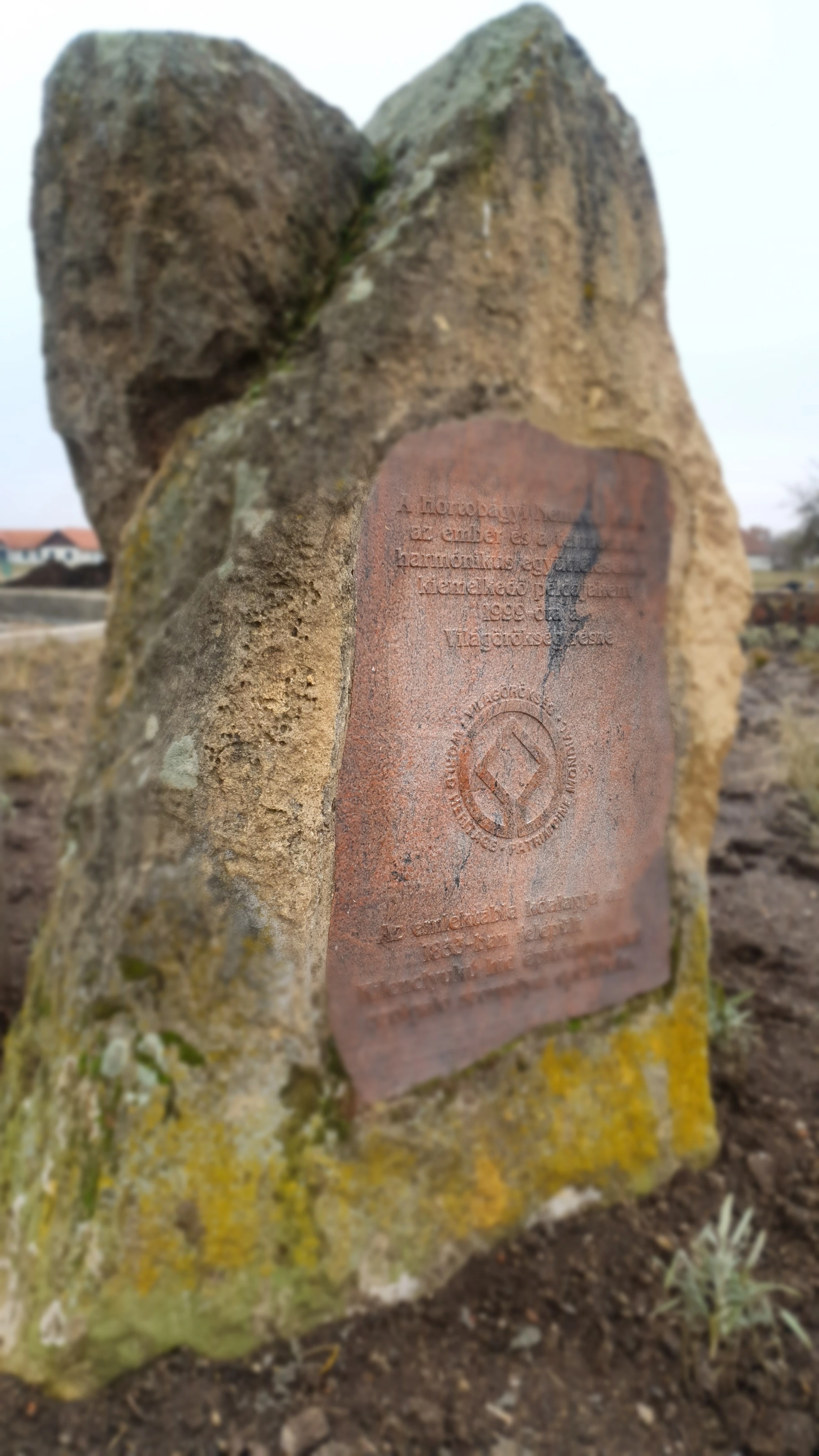
In Hortobágy village, a commemorative plaque marks the area’s World Heritage status. While the stone slab might initially seem out of place, it is made of dacite tuff from the quarry in Szomolya—the same material used to construct the iconic Nine-Arch Bridge—making it authentically connected to the region.
Gallery