
Draw well
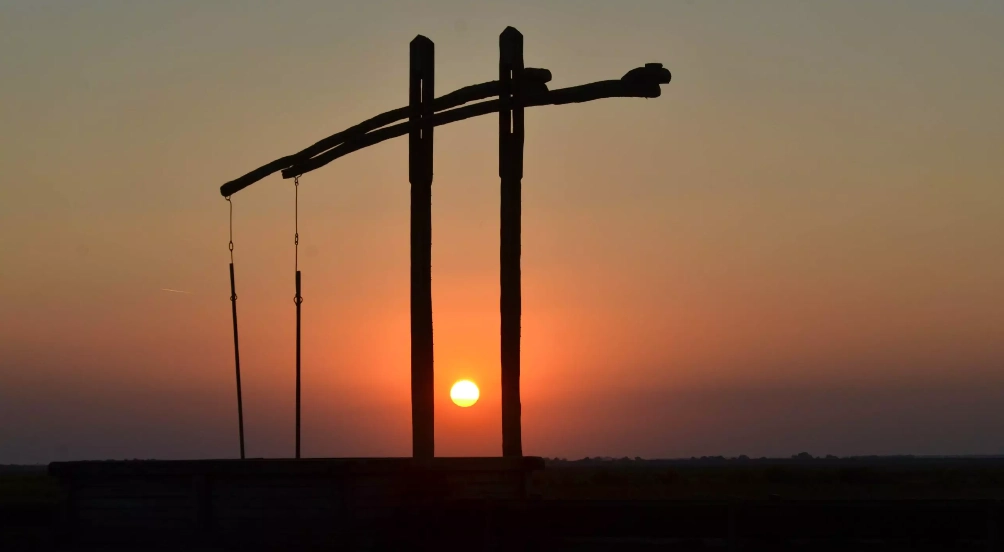
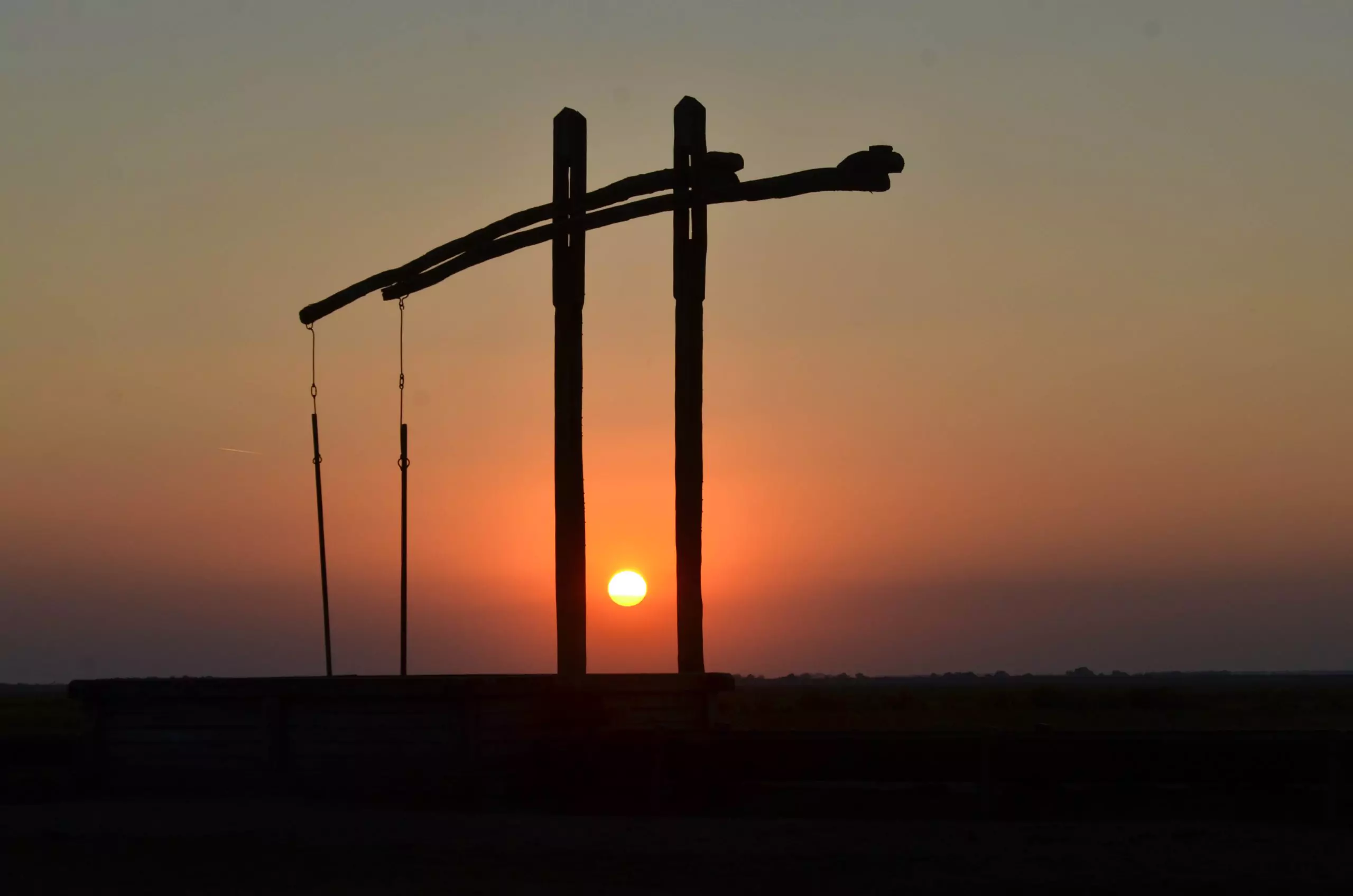
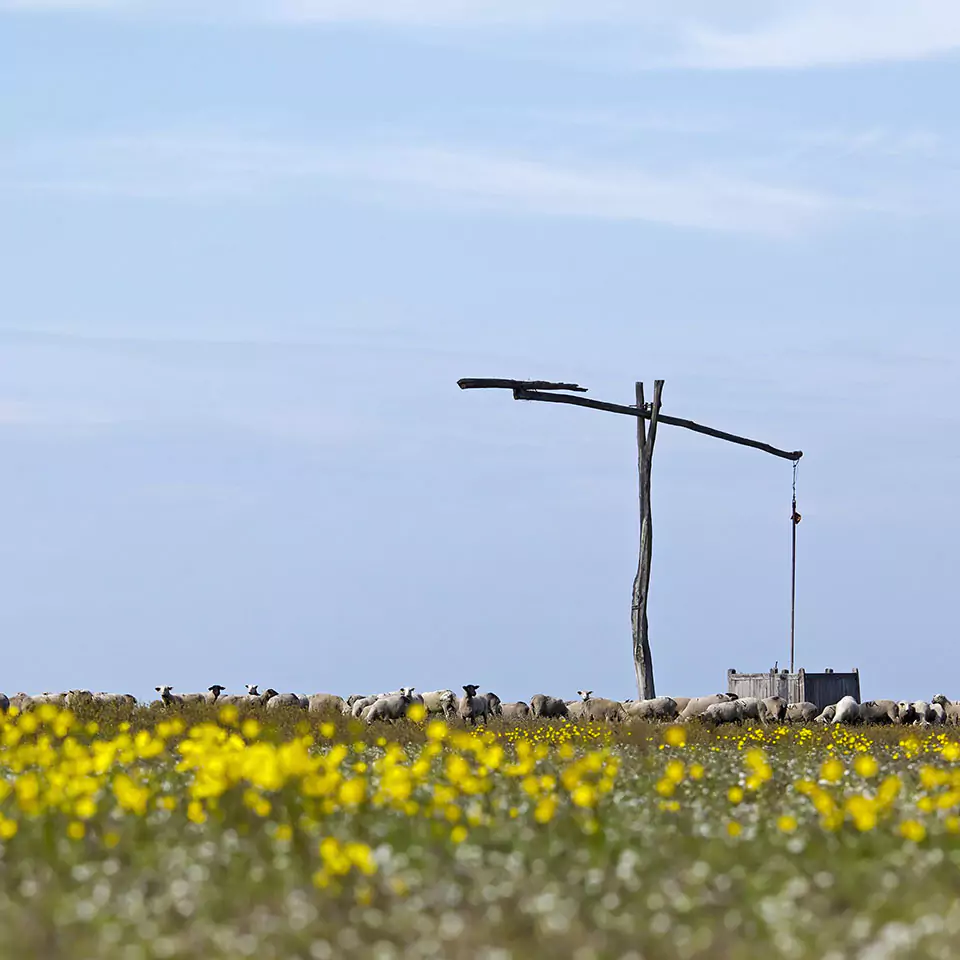
The characteristic landscape elements of the Hortobágy are the traditional draw wells known as "gémeskutak." In most places, these wells stood in courtyards, but in several villages or at their outskirts, they were also communal.
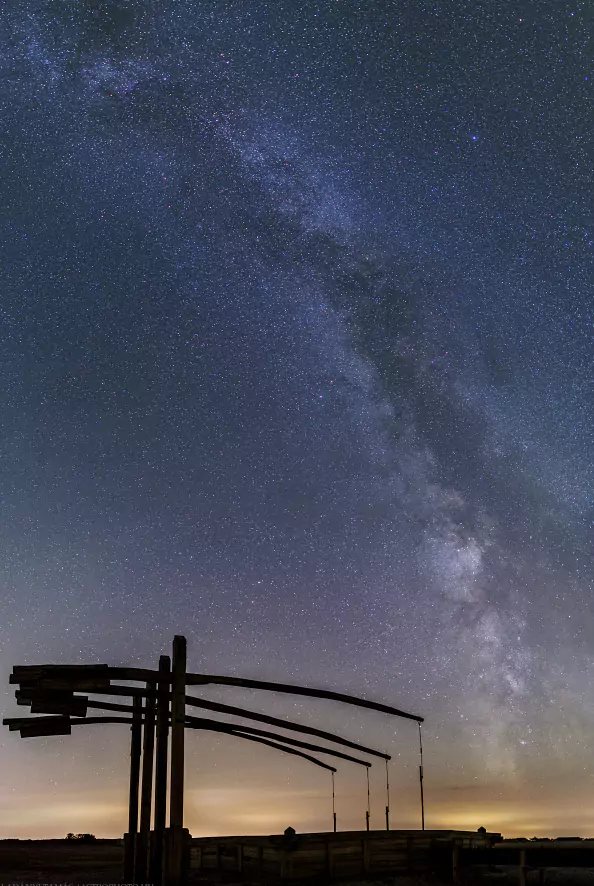
In areas with higher water consumption, such as the grazing lands of the animal-rich Hortobágy, twin or triple wells were constructed. These featured larger-than-usual well pits, from which water was drawn using two, three, or, as seen on the Mátai Plain, even four sweeps.
In the past, the well also served as a means of communication. By adjusting the position of the sweep and the counterweight, herders within visual range were signaled about times for grazing breaks, watering the livestock, or even that lunch was ready. Similarly, supporters used them to send messages to outlaws. They were even used as gallows. If a white piece of clothing was hung on the sweep, it signaled that a woman had visited the herder.
Gallery