
Cranes

The Crane – The Emblem Bird of the Hortobágy National Park
Currently, 15 species across 4 genera inhabit five continents.
Appearance:
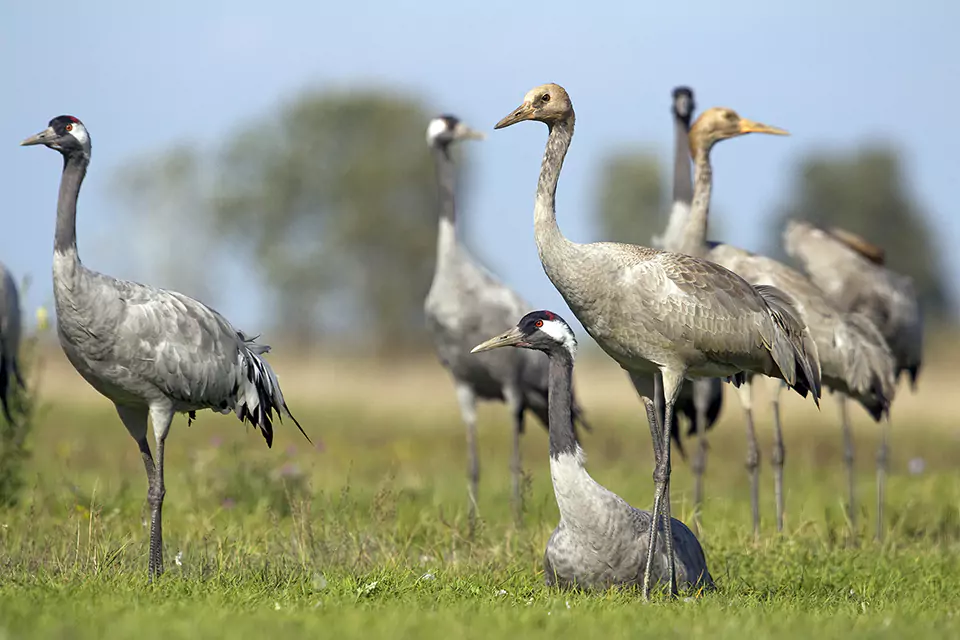
Cranes have a body length of 100-130 cm, a wingspan of 180-240 cm, and a body weight of 4500-6000 grams. Their juvenile plumage differs from that of adults.
Mating:
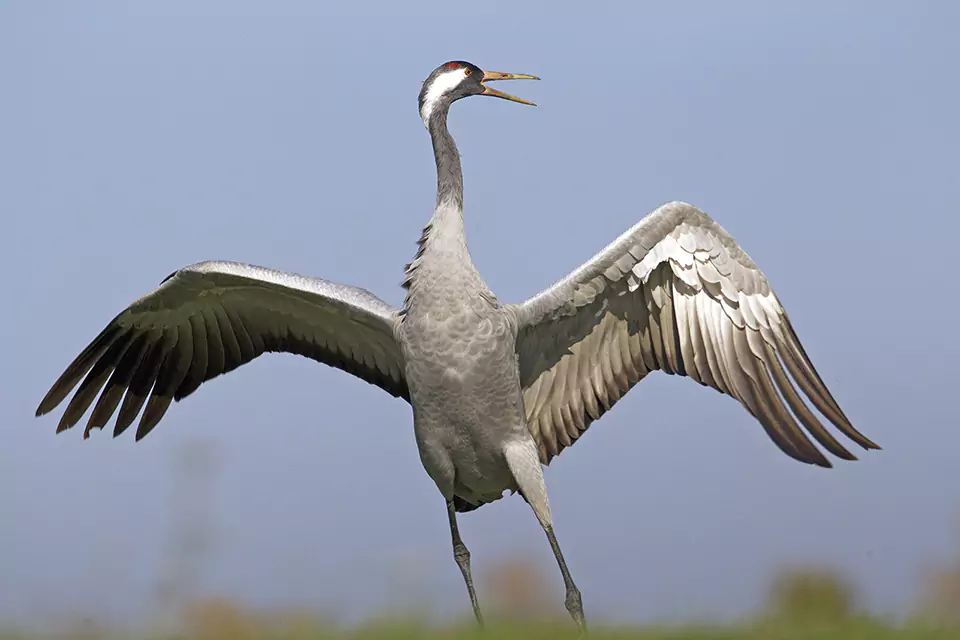
Cranes reach sexual maturity around the age of 3. They choose a mate for life. During courtship, males exhibit territorial behavior, performing dances and vocalizations to attract females. Globally, there are approximately 210,000-250,000 pairs of cranes, with 100,000-120,000 pairs living in Europe.
Nesting:
Most cranes arriving in Hungary breed in Northern Europe. Typical nesting habitats include marshes, wetlands, reed beds interspersed with forests, and flooded farmlands. They usually lay two eggs at a time and care for their chicks until migration.
Diet:
During the nesting period, cranes seek protein-rich food. Their diet often includes various mollusks, insects, amphibians, reptiles, and small mammals. During migration, they favor carbohydrate-rich food such as corn (their main food source in Hungary), potatoes, peanuts, and pistachios.
Daily Activity:
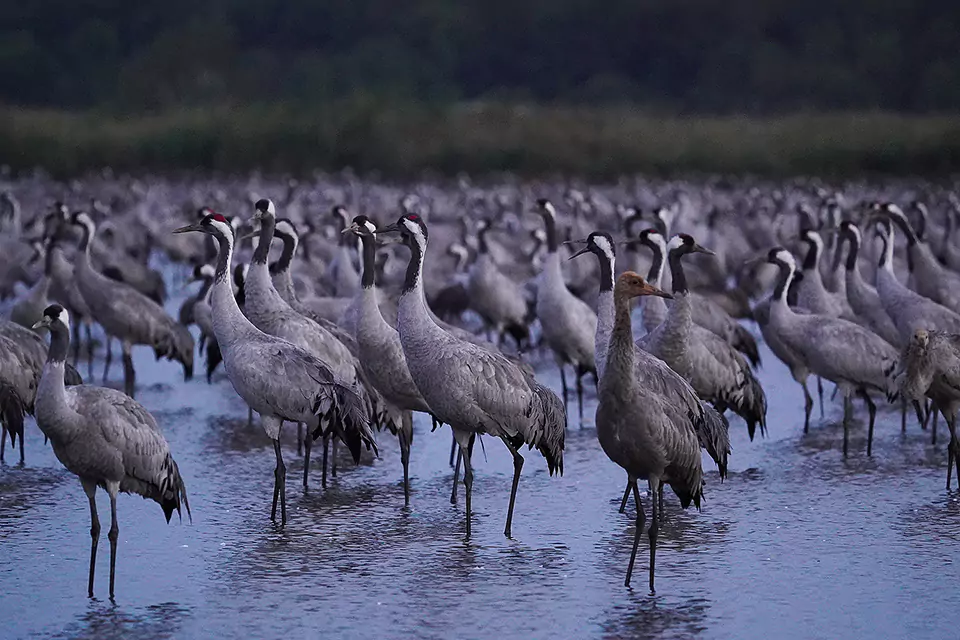
For roosting, cranes typically choose marshes and shallow fishponds where predators cannot easily approach them. During the day, they visit agricultural fields in the area.
Cranes in Culture:
The crane is considered a symbolic bird and is featured in numerous myths, legends, and tales. In North America, many crane clans exist, with the crane serving as their totem animal. In Hungarian folklore, cranes often appear on noble coats of arms and municipal emblems.
From the 17th to the 20th century, crane feathers were even used as a form of currency due to their high value. Additionally, crane feathers adorned noble hats and shepherds’ caps, primarily worn by individuals of higher status.
Gallery